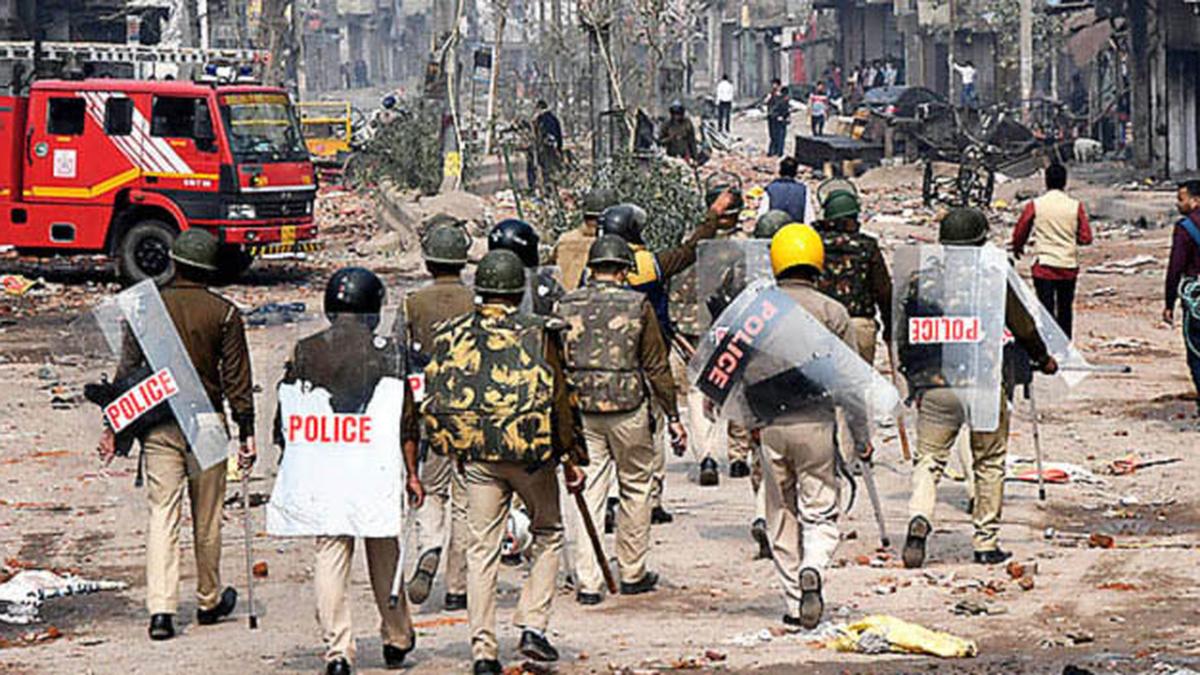
2020 Delhi riots: court acquits five of murder, cites unreliable evidence
04:30 AM, Wednesday,03 June 2026
The case pertains to the alleged murder committed in carea on February 25, 2020
A Delhi court on Tuesday (June 2, 2026) acquitted five persons accused of murdering a man named Mohd. Anwar during the February 2020 north-east Delhi riots. The court held that the prosecution had failed to prove its case beyond reasonable doubt.
Additional Sessions Judge Parveen Singh of the Karkardooma Courts acquitted Lakhpat, Yogesh, Lalit, Kuldeep Sen, and Kuldeep Kumar, who had been charged with several offences, including murder, rioting, arson, and dacoity, in addition to crimes under the Arms Act.
2020 Delhi riots: Court acquits four, says relying on police witnesses would be ‘dangerous’
The case pertains to the alleged murder committed in Karawal Nagar’s Shiv Vihar area on February 25, 2020. According to the prosecution, Anwar was assaulted, shot, and his body was burnt by a mob during the riots. DNA evidence established that human remains recovered from the site belonged to Anwar and that his death was homicidal.
However, the court found significant deficiencies in the evidence linking the accused to the crime.
Noting that the prosecution’s case rested primarily on the testimony of complainant Saleem Kassar, Anwar’s brother, who claimed to have witnessed the murder from a neighbouring house, the court pointed out that an investigation video and the testimony of the Investigating Officer showed that the spot where Anwar was allegedly killed was not visible from the location where Mr. Kassar claimed to be hiding. The judge observed that the complainant could not have witnessed the incident in the detailed manner described by him. The court further held that Mr. Kassar’s testimony contained “serious departures, improvements and contradictions” that undermined his credibility.
The court also found deficiencies in the testimony of one of the protected witnesses. While the witness named Lakhpat as being part of a mob that assaulted Anwar, he failed to identify any of the accused in court and stated that none of the assailants was present in the courtroom. The judge held that the prosecution failed to establish that the “Lakhpat” referred to by the witness was the accused facing trial. The court also expressed doubts about the reliability of another key witness, noting inconsistencies regarding whether he could have seen the incidents he described from the location where he claimed to be present.
Circumstantial evidence, including call detail records and the recovery of country-made pistols allegedly linked to the accused, was also found inadequate. The court pointed at “major contradictions” among police witnesses regarding the recovery proceedings and held that the recoveries were doubtful. Concluding that the prosecution had failed to establish the guilt of the accused beyond a reasonable doubt, the court extended the benefit of doubt to all five accused and acquitted them of all charges.