11:29 AM, Saturday, 18 July 2026
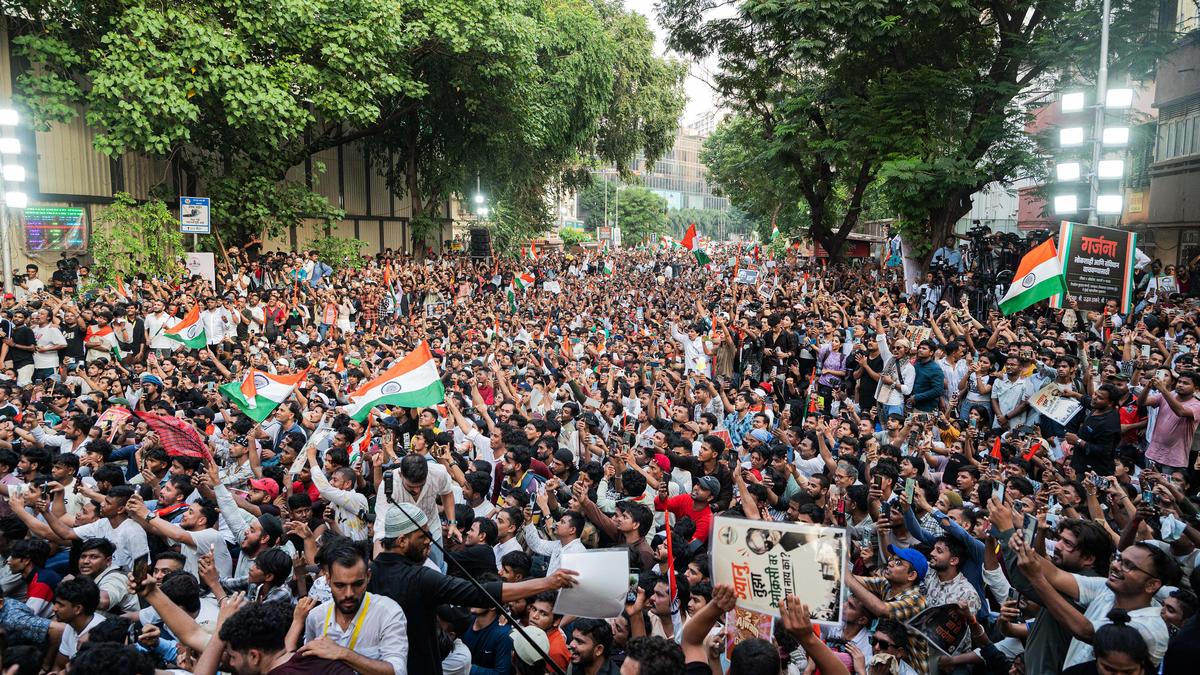
The High Court permitted the Bharat Rashtra Samithi (BRS) to conduct ‘Yuva Sangrama Sadassu’ at Saroornagar Stadium on Saturday after the police refused permission for the programme.
The BRS moved the court, claiming that the police were unnecessarily denying permission, though they were approached 15 days ago. The police argued that the BRS was planning to block the national highway and that the crowd might create law and order problems.
Allowing the event, the court directed the party to adhere to all conditions prescribed by the police and other authorities to ensure law and order, public safety, and smooth traffic management.
The meeting is being organised by the BRS to highlight what it describes as the Congress government’s failure to fulfil its promises on employment. The party plans to accuse the government of not providing the promised jobs to unemployed youth and remind the public of the commitments made by the Congress before the Assembly elections.
BRS working president KT Rama Rao claimed the permission was denied at the behest of Chief Minister A Revanth Reddy and accused the government of suppressing unemployed youth whenever they raised the demand for more notifications.
Mr. Rao said irrespective of the suppression, the BRS will continue to raise the issues of the unemployed youth while urging the job aspirants to attend the meeting to put pressure on the government. BRS general secretary R.S. Praveen Kumar asked why the Congress was afraid to permit the programme when it had conducted similar programmes while in opposition.
11:27 AM, Saturday, 18 July 2026
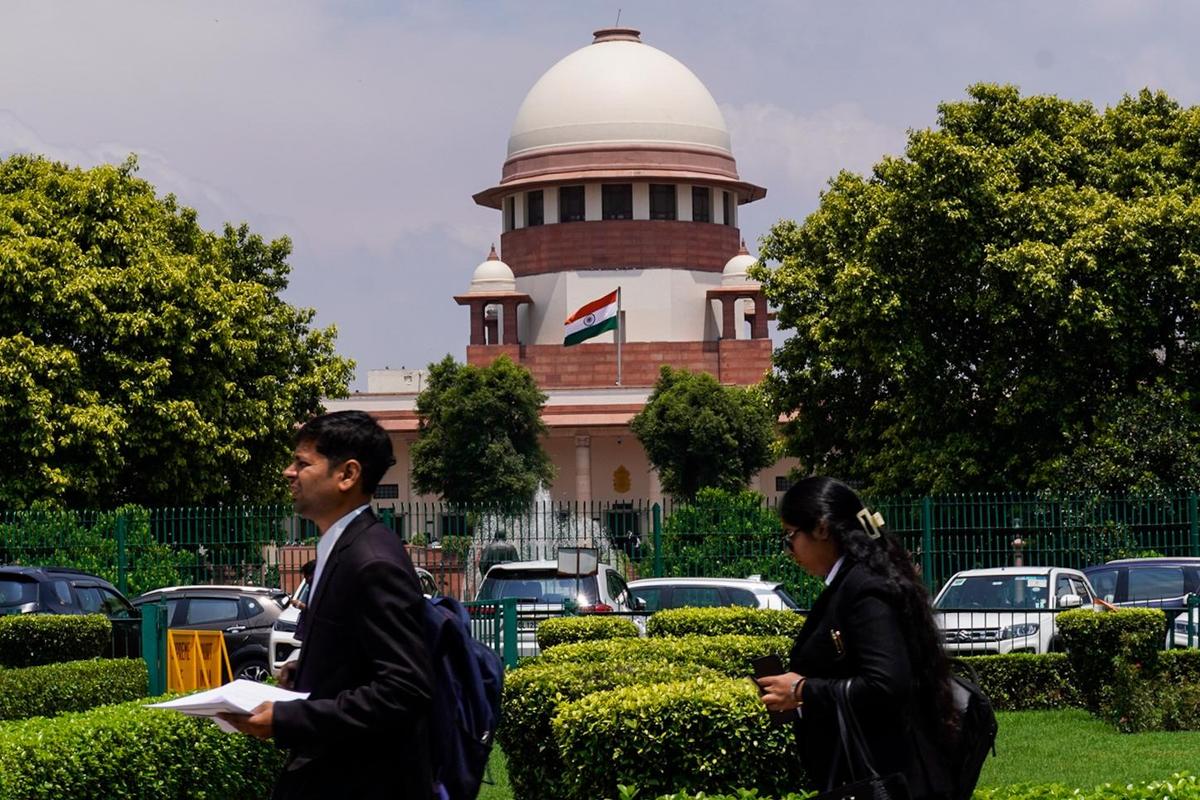
The Supreme Court has granted two weeks to the Assam government to file its responses on pleas challenging orders declaring five women as foreigners who allegedly entered the state illegally.
A Bench of Justices Vikram Nath and Sandeep Mehta passed the order after the counsel appearing for the Assam government sought time to file counter-affidavits in the five petitions.
"As prayed, two weeks' time is granted to the counsel for the respondent—State of Assam to file vakalatnama and counter affidavit(s) in all the cases. List after two weeks," the Bench said in its July 16 order.
On June 5, the top court had ordered status quo on the deportation of the petitioners while agreeing to hear their pleas challenging separate orders of the Gauhati High Court.
During the hearing on Thursday (July 16, 2026), an advocate appearing for one of the petitioners referred to a July 13 verdict of the apex court, which held that the determination of citizenship status must be made through a fair, lawful and reasoned process.
Another advocate appearing for some petitioners said two of the women were in detention and the top court had stayed their deportation by ordering status quo in the matter.
The counsel appearing for the Assam government sought two weeks to file replies, which was granted by the Bench.
The Gauhati High Court had earlier rejected the pleas filed by the petitioners seeking quashing of the orders passed by the Foreigners Tribunals declaring them foreigners or illegal migrants who had illegally entered India from Bangladesh.
In its July 13 verdict on a batch of separate appeals arising out of the proceedings before the Foreigners Tribunals in Assam and the erstwhile Illegal Migrants (Determination) Tribunals, the apex court had set aside the high court judgments which affirmed the orders declaring certain persons as foreigners.
The top court had asked the tribunals concerned to decide the references afresh, uninfluenced by any earlier observation by the high court or by the tribunals.
It had said the State has a legitimate and compelling interest in ensuring that persons who are not legally entitled to claim Indian citizenship do not secure such status by misuse of process, by false claims or by taking advantage of procedural delays.
"At the same time, the determination of such status must be made through a process which is fair, lawful and reasoned," the top court had said.
06:31 AM, Saturday, 18 July 2026
Senior professors at Bharathiar University whose headship of departments was withdrawn last year, after the policy of once-in-three-years rotation of the post came into effect, are understood to be contemplating legal remedy in the wake of a ruling by the High Court favouring UGC’s norms on rotation of headship among professors.
They had approached the High Court citing Section 45(3) of the Bharathiar University Act, 1981, which states that “a person appointed as the Head of the Department shall hold office, as such, for a period of three years and shall be eligible for re-appointment”. They had also cited restoration of headship in one of the departments during 2022, on this basis.
The University administration had enforced the policy of rotation last year following a directive from the Higher Education Department.
The High Court ruling was that “seniority” employed under Bharathiar University Act, 1981 as well as the word “seniority” employed in Ordinance 4(IV) issued by the University Grants Commission have to be read together.
Accordingly, equal opportunity to hold the post of Head of the Department has to be provided to all the eligible senior Professors working in the Department, the ruling said.
The contention of the appellants is that the University administration did not follow the procedure of taking the assent of the Standing Committee on Academic Affairs and the Senate for making an amendment to the Statute on three-year rotation of headship during February, 2026.
The reasoning of the university is that headship being in administrative domain, the question of following the procedure does not arise.
06:30 AM, Saturday, 18 July 2026
The Kerala High Court has refused to quash the magistrate court proceedings in the sexual assault case against former Malappuram SP S. Sujith Das and two other police officers.
The High Court dismissed the plea filed by Mr. Das, former Tirur DySP V.V. Benny, and former Ponnani CI Vinod Valiyattor, who had sought to quash the magistrate court proceedings against them.
The woman complainant alleged that the police officers had sexually assaulted her after she approached the police over a family dispute. The court held that the petitioners’ contention that prior permission from senior officers was required before ordering an investigation against them would not apply in grave cases such as sexual assault.
06:29 AM, Saturday, 18 July 2026
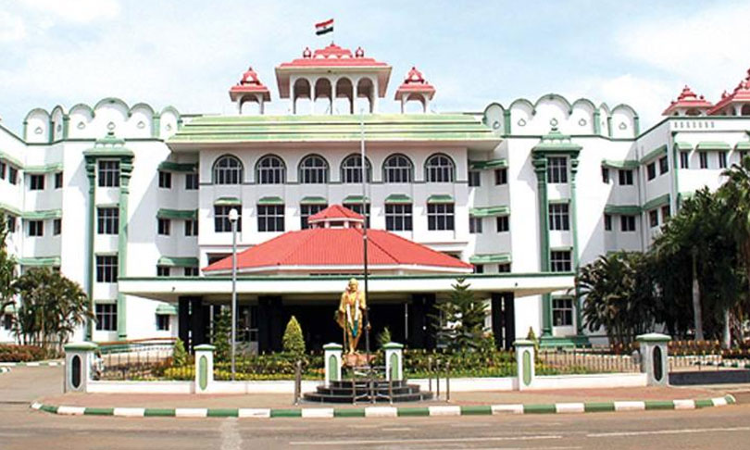
The Madurai Bench of the Madras High Court on Friday (July 17, 2026) granted interim bail, till August 4, to Sub-Registrar Justin Manikandan Subramanian who has been placed under suspension in the case of fraudulent registration of Palani math land.
Justice K. Rajasekar directed the petitioner to report before the CB-CID at 10.30 a.m. every day from July 27 till August 3, except on Sunday, and co-operate in the investigation. The court was hearing an anticipatory bail plea from Justin Manikandan Subramanian.
Grabbed with fabricated records: prosecution
The prosecution case is that the property belongs to a math. It is alleged that it was grabbed with fabricated records and in collusion with officials, including those of the Registration Department. The petitioner, who was working as the Sub-Registrar, is alleged to have registered the disputed document. Apprehending arrest, Justin Manikandan Subramanian filed the petition.
Senior counsel appearing for the petitioner submitted that the petitioner had been falsely implicated merely on the premise that he had registered the disputed document. According to him, the entire process was completed by the then Sub-Registrar, S. Balasundar. The petitioner merely assigned the document number and forwarded the document to the Collector (Stamps).
The State government said it had taken a serious note of the manner in which the math property was allegedly grabbed and even the District Registrar, a suspect in the case, had been placed under suspension. It was the petitioner who was in charge when the regular Sub-Registrar was on leave and completed the registration by assigning the registration number. Therefore, there was a strong suspicion about the role played by the petitioner. The larger conspiracy behind the registration of the document was still under investigation and sufficient time was required to ascertain the role of each accused person. The petitioner was involved in two previous criminal cases of a similar nature, it said.
The judge said that as on date, the allegation against the petitioner was that by assigning the registration number, he had completed the process of registration. At the same time, the prosecution had taken a specific stand that the larger conspiracy was still under investigation and the exact role of each of the accused persons was yet to be ascertained.
The court said that since the FIR was registered only recently, there should be no impediment to the probe. However, given that the substantial part of the registration process had already been completed by the then Sub-Registrar and to balance the interests of the investigation and the liberty of the petitioner, the court said it was inclined to grant interim protection to the petitioner with certain conditions. It scheduled further hearing for August 4.
Inquiry under way
Meanwhile, CB-CID SP Shajitha conducted an inquiry with officials of the Hindu Religious and Charitable Endowments and Registration Departments in Dindigul. A CB-CID team held an inquiry in Palani. The CB-CID commenced its probe in the case of fraudulent registration of 1.35 acres of land belonging to Arulmigu Dhandapani Swamigal Madam at the foothills of Palani in Dindigul district on Thursday.
06:27 AM, Saturday, 18 July 2026
The Madurai Bench of the Madras High Court has held that those residing within the territorial limits of a local body cannot claim right of burial/cremation in the burial/cremation ground vested with another local body.
However, such a right is enforceable if it partakes the character of a fundamental right under Article 25 of the Constitution or a customary right, said a Division Bench of Justices G.R. Swaminathan and K.K. Ramakrishnan.
The court was hearing the petition filed by the residents of Bommaiahgoundanpatti which is a part of Theni-Allinagaram Municipality.
According to the petitioners, they have been cremating their dead in the cremation ground located in Sukkuvadanpatti, a hamlet of Oonchampatti panchayat.
The petitioners alleged that the residents of Sukkuvadanpatti are preventing them from exercising their right to cremate in the Shmashana that is vested in Oonchampatti village panchayat. The petitioners’ counsel submitted that it would be more convenient for its residents to use Sukkuvadanpatti cremation ground.
A peace committee meeting was held. Since the residents of Sukkuvadanpatti made it clear that they would not relax their stand, the petition was filed.
The court said Section 110(f) of the Tamil Nadu Panchayats Act, 1994, states that a village panchayat has the duty to make reasonable provision for carrying out the requirements of the panchayat village for the opening and the maintenance of burial and burning grounds.
The local body makes provisions to meet the requirements of its residents. The non-residents do not figure in the scheme of things in respect of the statutory functions envisaged under Section 110 of the Act, the court said.
Rule 7(2) of The Tamil Nadu Village Panchayats (Provision of burial and burning grounds) Rules, 1999, states that the person having the control of a place for burying or burning the dead shall give information of every burial or burning of a corpse at such a place to any officer appointed by the village panchayat for this purpose, the court said.
As per the provisions of the Registration of Births and Deaths Act, 1969, any death will have to be notified and registered. The burial and cremation grounds will have to maintain registers and entries will have to be duly made therein. Death certificates are issued on the basis of such entries, the court said.
There has to be regular coordination between the persons in charge of the burial and cremation grounds and the local authorities. The statutory functions can be properly discharged only if the right of burial or cremation in the designated place is confined to the inhabitants of the local body concerned, the court said.
The judges said, though we hold that one cannot demand as a matter of right that he or she shall be cremated or buried in a cremation or burial ground that is vested in a panchayat of which he or she is not resident, we have to add an important caveat. If custom recognises that a particular place is a consecrated ground open to Hindus irrespective of their residential status, that would take the issue to the realm of fundamental rights.
The petitioners herein have not anchored their case on Article 25 of the Constitution. Convenience is the reason canvassed by them. An enforceable right cannot be built on this foundation, the court said.
The residents of Bommaiahgoundanpatti have not made a claim under Article 25 of the Constitution nor have they proved the existence of any customary right. Hence, we hold that they are not entitled to claim the right of cremation in the crematorium/cremation ground of Sukkuvadanpatti, the judges said and dismissed the petition.
06:25 AM, Saturday, 18 July 2026
The Telangana High Court on Friday dismissed a writ petition filed by former Minister Jalagam Prasad Rao seeking a direction to re-introduce the security coverage, which was recently withdrawn to him by the State government.
Justice T. Madhavi Devi of the HC said withdrawal of the security was an administrative action taken by the government after considering all the aspects of the requirement of security coverage to the petitioner. The court was not inclined to interfere with the order passed by the government in the matter, the order said.
01:11 PM, Friday, 17 July 2026
Justice B. Vijaysen Reddy of the Telangana High Court on Thursday adjourned to July 30 the hearing of a writ petition seeking a direction to the authorities to expedite the construction of the elevated corridor from Suchitra to Kompally on Hyderabad-Nizamabad national highway no. 44.
A 33-year-old techie C. Snehit Reddy of Kompally filed the writ petition stating that the Union government under Bharatmala Pariyojana scheme proposed construction of four six-lane elevated corridors from Secunderabad to Medchal on NH-44. The work of the elevated corridor from Suchitra to Kompally was started in 2002 and was supposed to be completed in 2024.
Citing various reasons, the deadline for completion of the corridor was extended till April of 2026. Even after the said deadline, the corridor remained uncompleted, the petitioner claimed. He contended that the stretch from Suchitra to Medchal on the national highway was highly prone to accidents. Several lives were lost and many sustained injuries in road crashes on this route, he claimed. He sought a direction to the authorities to ensure the construction of the corridor was completed at the earliest.
01:11 PM, Friday, 17 July 2026
The Public Works Department (PWD) has installed a high-powered borewell in the District Munsif cum Magistrate Court at Walajah town in Ranipet on Thursday to provide an uninterrupted water supply to the complex.
The action by PWD brought relief for hundreds of litigants, who are mostly farmers and petty traders from remote villages, after advocates stayed away from court proceedings for nearly a week against the disruption of the water supply to the complex by the civic body. “A new borewell in the court premises is a welcome measure because lack of water supply affects everyone, including court staff, advocates and litigants,” said S. Veeraiyan, a litigant.
At present, the British-era District Court in Walajah has magistrate and munsif courts in two-storey buildings on the spacious premises. Among the five major courts in the district, including Ranipet, Arakkonam, Arcot and Sholinghur, Walajah court is the oldest facility established in the early 1920s.
Against this backdrop, the existing borewell was installed in 1998 when the new building for the court complex was rebuilt. Pipelines were connected to the Overhead Tank (OHT), which has a capacity of around 15,000 litres. Since then, the borewell has remained a key source to meet water needs in the court complex.
Every day, on average, more than 200 litigants, mostly from Walajah taluk, visit the court. Around 120 advocates are working as regular practitioners. On average, over 150 cases come up in the court every day. At present, the court requires at least 5,000 litres of water to meet its everyday needs. The borewell has become dry due to the depletion of groundwater in the area. Walajah municipality has provided water to the court twice a week since 2025.
Key water pipelines that supply water to the court complex were damaged nearly a fortnight ago. Since then, the court had to depend on private tanker lorries to meet its needs. “Agitated advocates decided to stay away from court proceedings until a permanent solution is found for the water crisis. The new borewell will help us to meet water needs in the court,” said K. Elangovan, President, Bar Association (Walajah).
PWD officials said that the new borewell has been laid to a depth of 400 metres to ensure an uninterrupted water supply to the court buildings. High-powered pump sets will be installed to operate the borewell. The entire work will be completed in two days.
01:10 PM, Friday, 17 July 2026
With activist Sonam Wangchuk’s health condition worsening on the 19th day of his indefinite hunger strike at Jantar Mantar, the Delhi High Court ordered the Union and Delhi governments to ensure regular monitoring of his health.
Doctors warned on Thursday (July 16, 2026) that Mr. Wangchuk’s health condition had entered a critical stage. Satish Lamba, a doctor who has been examining Mr. Wangchuk regularly, said he has lost over 9 kg, but remains “mentally alert”. However, Dr. Lamba warned later in the evening that his body was likely consuming muscles and his organs may be next.
Mr. Wangchuk’s “blood sugar today is 80 mg/dl, and his pulse is 72 bpm,” Dr. Lamba said while delivering a medical bulletin in the afternoon. He said that doctors were maintaining “extra vigilance” and that at his current stage, Mr. Wangchuk’s uric acid levels were likely elevated as his muscles were likely being broken down by his body. He now weighs 56.9 kg.
Earlier in the day, the Delhi High Court ordered that Mr. Wangchuk must be “regularly medically checked up by government doctors.” During the hearing, a Bench of Chief Justice Devendra Kumar Upadhyaya and Justice Tejas Karia asked Solicitor-General Tushar Mehta whether any mechanism was in place to monitor Mr. Wangchuk’s health. Responding to the query, Mr. Mehta submitted that Mr. Wangchuk undergoes a daily health check-up.
“He [Mr. Mehta] further assures the court that depending upon the opinion of the doctors, whatever medical intervention is needed to check the deteriorating health condition of Mr. Wangchuk will also be taken,” the court recorded in its order.
The Bench passed the direction while hearing a public interest litigation (PIL) filed by advocate and social activist Rakesh Kumar Saini seeking urgent intervention to safeguard Mr. Wangchuk’s health. Mr. Saini sought intervention “even if forcibly” to save Mr. Wangchuk’s life.
Mr. Wangchuk has been on a hunger strike demanding Education Minister Dharmendra Pradhan’s resignation over issues concerning the country’s education system. On Thursday, the Cockroach Janta Party (CJP)’s protest site filled up substantially as more high-profile figures arrived at Jantar Mantar to register their support.
Three student supporters from the Communist Party of India (Marxist-Leninist)’s student outfit, the All India Students’ Association (AISA), were also at a critical stage of their concurrent hunger strike, Sai Balaji, a former AISA president, said in a statement.
“Aameen is at risk of a hypovolemic shock due to dehydration, Neha’s RBS levels hover around a dangerous 49 mg/dl and Manish has lost more than 10% of body mass,” Mr. Balaji said. Three other students had ended their strike in recent days, one of whom had been hospitalised and is recovering.
While there have been calls for Mr. Wangchuk to end his hunger strike, he remained resolute, saying calling off his fast without any response from the government would send a wrong message. Instead, he urged people to strengthen the CJP’s proposed Parliament march on July 20.
01:08 PM, Friday, 17 July 2026
The Supreme Court allowed separate pleas from the Greater Bengaluru Authority (GBA), and even the Karnataka State Election Commission, to extend the deadline for the conduct of elections to 369 wards across five city corporations in Bengaluru to December 2026.
The plea had cited “severe logistical challenges” due to the ongoing Special Intensive Revision (SIR) in Karnataka.
A three-judge Bench headed by Chief Justice of India Surya Kant, on a lighter note, asked the GBA if it would give another reason in December for a further extension.
The polls has in the past been repeatedly postponed for one reason or the other. The court had finally lost patience, giving the GBA a final opportunity to hold the election by August 31, 2026.
Senior advocate Kapil Sibal, appearing for the GBA, conveyed his personal disapproval, saying he would not appear for the civic body if it attempts to seek another extension in December.
The GBA had in the past faced scathing criticism from the court, which said the local body was employing “delaying tactics” to postpone civic polls in Bengaluru.
This time the GBA, in an application filed on July 9, 2026, said the whole administrative machinery and human resources of the five city corporations were fully engaged in the SIR exercise. The SIR required the services of 8,872 booth level officers, 938 booth level officers’ supervisors, 28 election registration officers, 75 assistant election registration officers, besides nodal officers, observers, trainers, resource persons, etc. Personnel had been drawn from Municipal Corporations, GBA and other bodies.
It said Bengaluru alone accounted for over 1.03 crore voters, constituting approximately 1/6th of the 5.54 crore total voters in the State. The electorate was spread across approximately 40 lakh residences, requiring the absolute and undivided commitment of booth level officers, staff and officers of the GBA, the five city Corporations and other departments.
The final electoral roll is scheduled to come out on October 7 in Karnataka.
“SIR is an extremely manpower intensive exercise entailing house-to-house visits by the booth level officers and also requires day to day involvement of complete supervisory structure involving other officers at all levels up to District Election Officer…The GBA faces severe logistical challenges,” the Civic Body had said.
01:07 PM, Friday, 17 July 2026
The Delhi High Court on Friday (July 17, 2026) agreed to hear on Monday (July 20, 2026) a public interest litigation (PIL) questioning the legality of Delhi police’s “indiscriminate and continuous surveillance” of the Cockroach Janta Party’s ongoing agitation at Jantar Mantar.
The petition has been filed by former Jawaharlal Nehru University Students’ Union (JNUSU) president Aishe Ghosh, who says she has been participating in the peaceful sit-in protest and hunger strike since its inception.
The plea said, “Police personnel stationed at the site routinely photograph and videograph the protesters, their activities, interactions, movements, and gatherings.”
It said a permanent surveillance tower equipped with cameras has been erected in the middle of the protest site, enabling round-the-clock monitoring and recording of all persons present at the site.
Ms. Ghosh’s plea said the surveillance apparatus has been used as “an instrument of intimidation and deterrence against student protesters”.
“On several occasions, police personnel have threatened student participants that the photographs and videos taken of them at the protest site would be forwarded to their parents, guardians, and the principals or authorities of their respective educational institutions,” the plea said.
She said such threats have “created a pervasive atmosphere of fear and have deterred several students from attending the protest, associating themselves with the movement, or openly expressing their views”.
The plea said the surveillance has a “chilling effect upon the exercise of the freedoms guaranteed under Articles 19(1)(a) and 19(1)(b) of the Constitution by deterring citizens from freely expressing dissent and participating in peaceful assemblies”.
Besides challenging the surveillance itself, the petition alleges that the police have failed to disclose the legal basis for collecting, storing and processing the personal data generated through the recordings despite repeated requests by protesters.
“To the best of the Petitioner’s knowledge, the Respondents have failed to disclose any statutory provision, executive instruction, or publicly available protocol authorising such continuous surveillance or regulating the collection, storage, processing, retention, and dissemination of the personal data thereby generated,” the plea said.
01:03 PM, Friday, 17 July 2026
The Delhi High Court on Friday (July 17, 2026) asked the Delhi police to respond to plea filed by student activist Sharjeel Imam, accused in the larger conspiracy case related to the 2020 North East Delhi riots, seeking bail.
A Bench of Justice Prathiba M Singh and Justice Vikas Mahajan issued notice on Mr. Imam’s appeal challenging the trial court’s July 4 decision rejecting his second regular bail application. The court posted the case for hearing on August 27.
Mr. Imam was arrested on August 25, 2020, and booked under the Unlawful Activities (Prevention) Act (UAPA) for being one of the “masterminds” of the February 2020 riots in northeast Delhi that left 53 people dead and more than 700 injured.
On July 4, the trial court dismissed the bail applications of Umar Khalid and Mr. Imam holding that it was bound by the Supreme Court’s January order which had put a couple of conditions on the same.
The Supreme Court, on January 05, 2026 had rejected the bail pleas of the two and had expressly directed that the applicants could renew their bail requests only after the protected witnesses in the case were examined or upon the expiry of one year from January 5, 2026, whichever was earlier.
In a common order for both Mr. Imam and Mr. Khalid, who are languishing in jail for over five years under charges of UAPA, the trial court held it had “no option” but to follow the Supreme Court’s directions.
Opposing the applications, the prosecution submitted that the Supreme Court had already rejected the bail pleas of both applicants in January 5, 2026, and that Mr. Khalid’s review petition had subsequently been dismissed on April 16, 2026. It argued that there had been no substantial change in circumstances justifying reconsideration of bail.
01:02 PM, Friday, 17 July 2026
The Madras High Court, on Friday (July 17, 2026) ,refused to quash a First Information Report (FIR) registered against political commentator V. Ponraj (60), for having made derogatory remarks against women followers of the ruling Tamilaga Vettri Kazhagam (TVK) party in an YouTube interview.
Justice G.K. Ilanthiraiyan dismissed a petition field by the political commentator to quash the FIR booked on the basis of a complaint lodged by Minister for Energy Resources and Law R. Nirmalkumar before he assumed charge as a Minister and during the course of election campaign.
The complaint was initially lodged with the Chief Electoral Officer of Tamil Nadu on March 26. According to the complaint, lodged in his capacity as the joint general secretary of TVK, Mr. Nirmalkumar had come across on March 18, the YouTube interview given by Mr. Ponraj and found it to be highly derogatory.
Thereafter, the cyber crime wing of Chennai Central Crime Branch police registered the FIR on May 12 for offences under Sections 79 (uttering words intended at insulting the modesty of a woman) and 296b (uttering obscene words) of the Bharatiya Nyaya Sanhita and Section 67 (publishing or transmitting obscene material in electronic form) of the Information Technology Act of 2000.
The FIR was booked against the petitioner as well as the YouTube channel. However, claiming that the YouTube video concerned was deleted before the registration of the FIR, the petitioner said, it was “a clear case of misuse of political power as a tool of political vendetta and that the de-facto complainant had orchestrated this complaint to silence legitimate political criticism, which is protected as free speech under Article l9(1)(a) of the Constitution.”
Mr. Ponraj further said: “The FIR is an outcome of an online interview and the petitioner was only answering the questions which were posed to him and the telecast (publishing) was done by a private YouTube channel. Hence the FIR is liable to be quashed... With the materials available on record and on reading the FIR, it would be an abuse of process of court to proceed against the petitioner for the alleged offences.”
01:01 PM, Friday, 17 July 2026
The Supreme Court on Friday (July 17, 2026) permitted the exhibition of an animated film ‘Mahaprabhu Jagannath’, prohibited for not strictly adhering to the Skanda Purana and Brahma Purana, assuring that animated fiction cannot diminish piety.
“Devotion is something internal for everyone. Can an animated film bring down devotion? How can fiction be in accordance with the Skanda Purana and the Brahma Purana… It is only imagination at work,” Justice B.V. Nagarathna, heading a Division Bench, addressed the Odisha government and trustees of the Lord Jagannath Temple in Puri, who have objected to the film.
The Bench took the middle path by allowing the movie to be released, but only after the completion of the ongoing Lord Jagannath Rath Yatra on July 27, 2026. The court directed that the film could be released on or after July 28.
The apex court was hearing an appeal filed by the film’s makers, Ele Animations, against an Orissa High Court ban on its screening. The film was scheduled for release on July 17 in 300-odd theatres across the country. Significantly, the High Court had stopped the release of the film even after the Central Board of Film Certification (CBFC) had cleared the movie.
Senior advocate Devadatt Kamat, for the film makers, said the intent of the film was to instill devotion in children and the fictional form was adapted to make the divine origin and stories of the deity “palatable” to young minds. He said the film was about a child, Balram. Mr. Kamat there had been animated works on ‘Bal Ganesh’ and ‘Bal Hanuman’.
Mr. Kamat said the film was only a movie adaptation of a TV series which has been running successfully to 100 crore views on YouTube for over two years. He said the ban, besides causing economic losses and mass cancellation of theatres and bookings, had struck a telling blow on the fundamental freedom of speech and expression.
Solicitor General Tushar Mehta, appearing for the State of Odisha, said the trustees and Gajapati of the Lord Jagannath Temple had found certain portions of the film objectionable.
“There are certain issues… The way in which the Lord is shown fighting… I do not take examples but consider if Lord Krishna is shown as having been born in a resort instead of in prison… You may have literary freedom, but you cannot have radical change,” Mr. Mehta reasoned.
Mr. Kamat contended how parties’ objections or the State intervention or even the High Court could possibly interfere in the release of a CBFC-certified film on the grounds of public order and morality. He said the objections raised by the respondent parties had been considered by the CBFC before certifying the film.
“Release it by the end of the month.. Release it after the Rath Yatra,” Justice Nagarathna addressed Mr. Kamat.
The senior advocate agreed, but not without querying, “can the Supreme Court postpone the release of the film”.
12:31 PM, Friday, 17 July 2026
The Madras High Court, on Friday (July 17, 2026), ordered omission of ruling Tamilaga Vettri Kazhagam (TVK) president C. Joseph Vijay (Chief Minister), general secretary N. Anand alias ‘Bussy’ Anand (Minister) and Villupuram district secretary N. Mohanraj from a writ petition filed by party lawyer M. Gnanasoundari to consider her applications too while appointing law officers for the district courts.
Justice Mohammed Shaffiq passed the order after the petitioner’s counsel agreed to give up the three private respondents and retain only the Law Secretary and Villupuram Collector. The High Court Registry had listed the case for deciding its maintainability and the judge said, the three private respondents appeared to have been included only to “hit the headlines.”
The judge disposed of the writ petition after recording Advocate General Vijay Narayan’s submission that the writ petitioner’s applications for the posts of Special Public Prosecutor at Villupuram Mahila Court and Additional Public Prosecutor at Villupuram Principal Sub Court would also be considered when the government officials make tenure-based appointments for those posts.
The A-G said, numerous applications had been received for the law officers’ vacancies across the State and hence the government was unable to make regular appointments before the tenure of the previous law officers ended on June 30. Since the State could not go unrepresented before the courts in the meantime, the government had chosen to make temporary appointments for a maximum period of six months.
On the other hand, the petitioner’s counsel contended there was no explanation as to why his client’s name was not considered for the temporary appointments and claimed another advocate, facing a goat theft case, had been appointed temporarily. The judge replied such “aberrations” at the lower level could not be used to paint the entire selection process as tainted.
If the petitioner was in possession of materials to prove corruption in the selection process, then she could always lodge a police complaint and set the criminal law in motion. Instead, she could not raise such issues by traversing beyond the scope of the present writ petition in which the prayer was only to consider her applications too for the posts of law officers, the judge said.
Further, referring to the petitioner’s averments in her affidavit that even Dravida Munnetra Kazhagam (DMK) and All India Anna Dravida Munnetra Kazhagam (AIADMK) advocates had been selected to various posts of law officers on temporary basis, the judge said, such a submission made by the petitioner, belonging to the ruling TVK party, would only show the selection process had been “fair and unbiased.”
12:29 PM, Friday, 17 July 2026
The Delhi High Court has observed that nowadays virtually anyone armed with a mobile phone and a microphone can proclaim themselves to be a “reporter”, often without any journalistic training, ethical grounding, or accountability.
Justice Girish Kathpalia made the observation on July 16, 2026 while granting bail to two persons allegedly involved in assaulting two reporters freelancing for a YouTube channel. The reporters were recording a video at a place of worship in Delhi’s Seemapuri area that was allegedly constructed without authorisation.
According to court records, the incident took place on July 4, 2025. The recording agitated local residents, who allegedly attacked the reporters and even chased them into a bus they had boarded to escape. The mob, allegedly including the two accused, entered the bus and assaulted the reporters.
Observing that “it was apparently a mass fury and, as mentioned above, involvement of the present accused/applicants in the alleged assault remains a grey area,” the court granted bail to the two accused.
During the proceedings, the prosecution argued that the assault on the complainant and his colleague amounted to an attack on the freedom of the press. The court, however, noted that the reporters were not associated with any accredited news organisation but were freelancing for a YouTube channel.
“Despite the sensitivity of the issue, the complainant (reporters) apparently opted not to take the local police into confidence before starting their venture, though that cannot at all justify the attack on them by the agitated locals,” Justice Kathpalia said.
The judge observed that in recent years, with the rapid proliferation of social media and digital platforms, a significant section of the media has become largely unregulated and unorganised.
“It has become increasingly common for such self-styled reporters to aggressively thrust microphones at citizens, demanding instant responses. When the person chooses to remain silent or refuses to comment, which is a right of every citizen, the so-called reporter often turns to the camera and declares that the individual is evading questions,” the judge said, adding, “Such conduct creates a misleading public narrative and generates unwarranted public pressure.”
“Of course, the freedom of the press must remain zealously protected. But it cannot become a shield for irresponsible journalism, intimidation or the dissemination of content that jeopardises public order,” Justice Kathpalia said.
He added, “The time has come for the legislature to consider an appropriate regulatory framework that preserves the freedom of the press while ensuring professional accountability, ethical standards, and respect for the rule of law, the rights of citizens, and the larger public interest.”
12:03 PM, Friday, 17 July 2026
The Supreme Court on Friday (July 17, 2026) sought a response from the Election Commission of India, West Bengal government, and the Chief Electoral Officer of the State on a petition seeking time-bound disposal of appeals filed by person excluded from the voter list following the SIR process.
A Bench hearing a petition by Prasenjit Bose, chairperson of the SIR Committee, West Bengal Pradesh Congress Committee, said only 38,000 of the 34 lakh appeals have been heard so far by the tribunals.
Mr. Bose, represented by senior advocate Gopal Sankaranarayanan and advocate Neha Rathi, also noted that the tribunals have allowed re-inclusion in the electoral roll in 70% of the appeals heard so far.
The petition highlighted the need for streamlining of the appeal process, disclosure of data and the publication of the Standard Operating Procedure (SOP) for the sake of transparency and in larger public interest.
“The fact that only 38,000 of 34 lakh appeals pending have been heard by the Appellate Tribunals makes it important for the apex court to give certain directions to make the appellate process more efficient,” Mr. Sankaranarayanan submitted.
He said that since 70% of the appeals heard by the Appellate Tribunals have been allowed, there ought to be only a “minimum documentary threshold” for faster disposal of the appeals.
Mr. Sankaranarayanan said that since May 2026, at least three government orders (PDS, Annapurna Yojana and caste verification) have been passed by the State government. It was pointed out that those excluded in the SIR, many of whom happen to be from the marginalised and economically weak sections, would not be considered eligible to receive welfare benefits.
“These adversely affect those whose names have been deleted in the SIR process and could possibly lead to their names being deleted as beneficiaries,” the senior counsel contended.
The court intervened in this regard to point out that its May 27 judgment in the Bihar SIR case had specifically underscored that SIR data should only be used for electoral purposes, and must not reflect in the implementation of other welfare schemes.
Justice Joymalya Bagchi, on the Bench, pointed out that the May 27 judgment had also made it very clear that the SIR data could not be used by the Election Commission to determine citizenship.
“The EC has a corresponding duty to refer the matter to the government for adjudication under the Citizenship Act,” Justice Bagchi observed.
Considering the issues involved, the court agreed to hear the case at an early date.
12:01 PM, Friday, 17 July 2026
The Vadakara Judicial First Class Magistrate Court in Kozhikode on Friday (July 17, 2026) dismissed an application moved by the Special Investigation Team (SIT) seeking the cancellation of the bail granted to Jithin Bhaskaran, a local leader of the Democratic Youth Federation of India (DYFI) and the prime accused in the controversial ‘kafir’ screenshot case.
After hearing the submissions from both the prosecution and the defence, the court rejected the SIT’s prime argument that Mr. Bhaskaran had breached his bail conditions upon his release from judicial custody.
The prosecution’s argument was that, after being released on bail on July 3, the accused violated the conditions of his bail by posting messages on Facebook that allegedly challenged the investigating team. It also raised concerns in the court with a claim that he attempted to create public unrest in the locality and interfered with the course of investigation.
The case
The case, which triggered widespread political controversy in Kerala during the Vadakara Lok Sabha election campaign, relates to the circulation of a screenshot portraying Congress candidate Shafi Parambil as a devout Muslim and CPI(M) candidate K.K. Shailaja as a kafir (non-believer), while falsely attributing the post to Muslim Youth League worker Mohammed Kasim.
According to the prosecution, Mr. Bhaskaran, a former member of the DYFI Vadakara block committee and CPI(M) Thuruthi local committee, allegedly sent the controversial screenshot to around 200 recipients using WhatsApp’s broadcast feature and attempted to destroy all related digital evidence. The prosecution submitted that the district forensic division had recovered evidence supporting these allegations.
He was arrested by the Special Investigation Team on June 16, 2026.
12:00 PM, Friday, 17 July 2026
The Supreme Court on Friday (July 17, 2026) came down heavily on a private hospital and its doctor for allegedly refusing to provide emergency treatment to a four-year-old rape victim, who later succumbed to her injuries in a rape and murder case in Ghaziabad.
Calling their conduct merciless, ruthless and insensitive, a Bench led by the Chief Justice of India (CJI) Surya Kant and comprising Justices Joymalya Bagchi and V Mohana questioned the doctor's medical ethics and warned the hospital that if it were to impose a monetary penalty for its conduct, it would have a chilling effect.
"You have no business of writing 'doctor' with your name if you don't perform your duty. If you had sensitivity, you would have gone with the child to another hospital if you didn't have the facility. You ignored because she was poor? Couldn't afford your fee?" the Court said to the counsel representing the hospital.
The Court added that any doctor faced with such a situation was expected to ensure the child received immediate medical assistance. "A child victim of such a heinous crime is brought before you and you are so merciless you did not provide medical care. If you had any empathy you would have taken her to the hospital yourself", the CJI remarked.
Glaring lapses in the investigation
The CJI then cautioned the hospital about the possible consequences of its conduct. The Court's remarks came as it continued hearing the case arising out of the alleged rape and murder of the four-year-old child in Ghaziabad. The Court has indicated that it will take up the matter next week, preferably on Tuesday (July 21) .
At the previous hearing, the Court had strongly criticised the Ghaziabad Police over what it termed complete indifference and insensitivity in the initial investigation, pointing to delays in registering the FIR, failure to initially invoke rape and POCSO offences despite injuries recorded in the post-mortem report, and several other investigative and medical lapses.
Flagging glaring lapses in the investigation, the Court had directed the Commissioner of Police, Ghaziabad, and the SHO of Nandgram Police Station to remain personally present before it to explain the sequence of events.The Court had noted that the FIR was registered only a day after the incident, even though the victim was a four-year-old child. Referring to the post-mortem report, the Bench observed that it recorded injuries to the child's private parts suggesting assault with a blunt object.
Despite these findings, the police initially investigated the matter only as a case of murder, prompting the Court to remark that "no proper inquiry has been conducted so far" and that there appeared to be a "hush-hush approach" surrounding the incident.The Court had during earlier hearing also questioned why the police had initially invoked only offences relating to murder and destruction of evidence. It observed that despite the apparent indicators of sexual assault, no offences under the POCSO Act or the rape provisions were registered at the outset.
We provide AI-driven legal insights with instant access to Supreme Court and High Court judgments. Reach out today to experience faster, smarter legal research tailored to your needs!
Call to ask any question